
History of Torrance
The City of Torrance was founded on May 31, 1911 by Jared Sidney Torrance and Associates by the purchase of 2,791 acres of land from the Dominguez Estate Company for $976,850. Susana Dominguez del Amo sold an additional 730 acres to Torrance for $350 per acre. This land was originally a small part of the Spanish land grant called Rancho San Pedro, given to Juan Jose Dominguez in 1784. At its inception, this planned industrial town provided housing for 500 people.
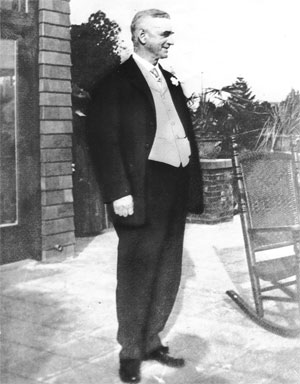 Jared Torranc
In March 1912, Torrance had originally proposed that the new development be named “Dominquez”. The post office would not allow the use of this name since there was already a post office with that name. On March 12, 1912, at a meeting of the board of directors of The Dominquez Land Company, of which Jared Torrance was President, this issue was discussed, with many variants of the name “Dominquez” discussed. Other names considered included “Southport” ,””Coronel,” “Obrador,” “Don Manuel” and “Industrial”. Finally, over the objections of Jared Torrance, the board approved a resolution naming the new development “Torrance”.
Frederick Law Olmstead, Jr., of Boston, the foremost landscape architect of the country at the time, who provided the landscape planning for the Palos Verdes Project, laid out the new industrial community of Torrance. On the broad empty cornfield he placed the industrial sites in the lee of the town, away from the prevailing westerly breeze, chose a knoll for the civic center, designated the sites of the city hall, library, auditorium and other public buildings, backed his civic center with a thirty-acre park and, fixing his eyes firmly upon the white peak of Mt. San Antonio at the horizon, laid out a broad boulevard straight through the business center toward the snowy crest. In addition, he gave the individual home site a minimum width of forty feet, and a depth of a hundred and forty feet, which was much larger than most home sites on the east coast.
 Aerial View of Early Torrance
The Pacific Electric Railway depot in Torrance at 1250 Cabrillo Avenue was completed in 1912 to serve Red Car passengers on this Torrance spur from the Gardena line. The Depot is now a popular restaurant.
The discovery of oil brought the initial development of Torrance. At the time the city was incorporated in May 1921, it had 3.82 sq. miles, and had a population of about 1,800 residents. The first oil well was dug in December 1921, and it was a gusher. The discovery of oil increased the population to 2,750 in 1922. Soon, there were oil derricks throughout the city. From 1926 to 1931, 5 annexations of land took place increasing Torrance to 18.88 square miles. Today, Torrance consists of 21 sq. miles.
By the early1950’s, there were 615 oil wells. In the late 1950 €™s, however, oil production decreased significantly. Finally, an edict was passed by the city requiring the removal of all wooden oil derricks by July 1, 1961. The final tower came down in 1963. Torrance has now become one of the largest cities in Los Angeles County today.
For more information about Palos Verdes and South Bay Real Estate and buying and selling a home on the Palos Verdes Peninsula, visit my website at https://rightreligion.stellarwp.site . I try to make this the best real estate web blog in the South Bay Los Angeles and the Palos Verdes Peninsula. I would love to hear your comments or suggestions.